
"If you don't pick up those toys right now, I'm throwing them in the trash!"
Does that sound familiar? If you’ve ever found yourself shouting a "then" statement that you know you won't actually follow through on, you aren't alone. We’ve all been there, frustrated, exhausted, and feeling like the only way to get a child to listen is to escalate the stakes.
The problem is that when we use consequences as threats, we stop leading and start reacting. Instead of teaching our children how to make good choices, we enter a power struggle where nobody wins.
At Family Martial Arts Academy, we view every interaction with a child as a leadership opportunity. To help you move from a "controller" to a "leader" at home, we’ve put together this guide on how to stop the cycle of threats and start using consequences that actually work.
The Difference Between a Threat and a Consequence
Before you can change your approach, you have to understand the difference between these two tools. While they might look similar on the surface, they have completely different impacts on your child’s development.
- A Threat is reactive, emotional, and often vague. It is delivered in the heat of the moment, usually with a raised voice. Its goal is immediate compliance through fear.
- A Consequence is proactive, neutral, and predictable. It is a logical result of a choice. Its goal is to teach responsibility and self-discipline.
When you use a threat, you are the "enforcer." When you use a consequence, you are the "guide." By shifting your mindset, you can be the most dependable person you know for your child, a steady leader they can trust even when they’ve made a mistake.
Step 1: Parent in Advance
The best time to handle a power struggle is before it ever begins. We call this "Parenting in Advance."
Most power struggles happen during predictable "hot spots", morning routines, transitions from screen time, or bedtime. Instead of waiting for the conflict to erupt, set the ground rules when everyone is calm.
For example, instead of yelling when it’s time to turn off the tablet, try this: "We are going to have 20 minutes of screen time. When the timer goes off, the tablet goes on the charger. If you choose to keep playing after the timer, we won't have screen time tomorrow. Do you understand the choice?"
By laying out the "if/then" scenario ahead of time, the consequence becomes a factual outcome of their choice, not an emotional reaction from you.

Step 2: Connect Before You Direct
If you find yourself shouting instructions from the kitchen while your child is in the living room, you are setting yourself up for a struggle.
In our leadership program, we teach the importance of "Focus." For a child to lead themselves, they first need to be able to focus on the task at hand. Before you give a direction, move into their space.
- Get Close: Walk over to them.
- Make Eye Contact: Briefly enter their world. Comment on what they are doing ("That’s a cool tower you’re building").
- Give One Clear Instruction: Keep it simple. "It’s time for dinner. Please wash your hands now."
- Wait: Give them 15 seconds to process.
This simple act of connection reduces the feeling of "being told what to do" and increases the feeling of "being guided."
Step 3: Use the "Weather Report" Tone
One of the most powerful tools in a leader’s arsenal is their voice. When you yell, you signal that you have lost control of the situation. To maintain your authority, you must maintain your cool.
Think of your tone as a weather report. A meteorologist doesn't get angry at the rain; they just report that it’s raining.
If your child chooses not to follow a rule, deliver the consequence with that same factual neutrality.
- Instead of: "That’s it! You didn’t listen, so no story tonight! I’m so tired of this!"
- Try: "You chose to keep playing instead of brushing your teeth. That means we don't have time for a story tonight. We’ll try again tomorrow."
When you stay calm, the focus remains on the child’s choice rather than your anger. This is how you how to be consistent and get experience in effective leadership.

Step 4: Follow Through Every Single Time
Reliability is the foundation of respect. If you set a consequence and don't follow through, you are teaching your child that your words don't matter. This actually increases power struggles because the child will continue to test the boundaries to see where they actually sit.
If you say the tablet is going away for the day, the tablet must go away: even if it makes your afternoon harder. Consistent follow-through builds a sense of security for the child. They know exactly where the lines are, which helps them feel safe and confident.
Get Immediate Relief: The "Lead Without Yelling" Tool
Breaking the cycle of yelling and threatening is hard work. It requires a complete shift in how you view your role as a parent. If you find yourself struggling to stay calm or feeling overwhelmed by constant power struggles, you need a system that works.
We recommend checking out LeadWithoutYelling.com. This resource is designed specifically for parents who want to move away from reactive parenting and toward proactive leadership. It offers practical tools and strategies to help you get through to your kids without losing your cool.
The Training Triangle: Body, Mind, and Heart
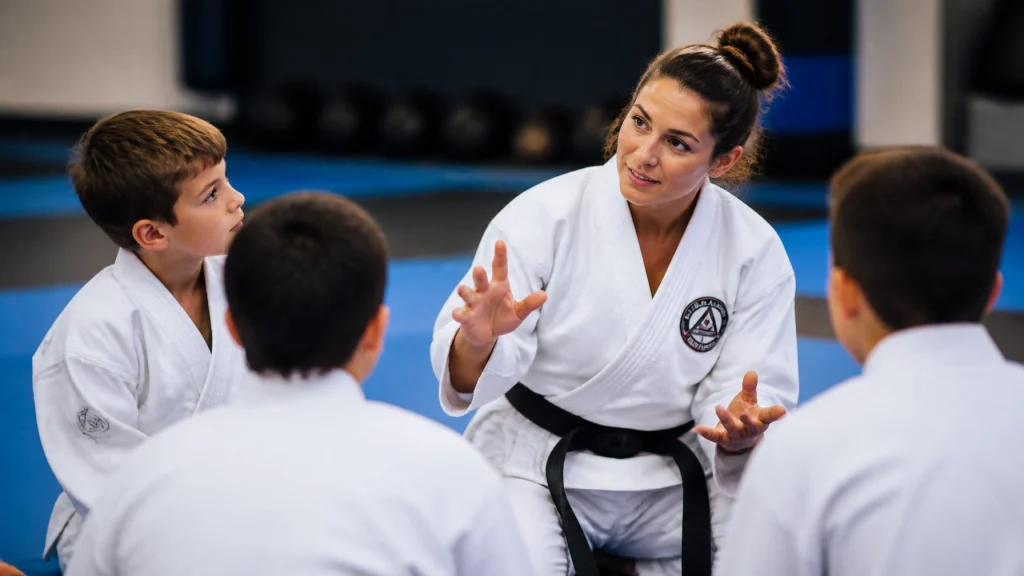
At Family Martial Arts Academy, we support parents by reinforcing these leadership principles on the mats. Our curriculum is built around the Training Triangle, which focuses on developing the whole child.

- Body: Developing physical confidence and the "Body Language of a Leader."
- Mind: Building the focus and mental resilience needed to handle challenges without giving up.
- Heart: Cultivating respect, empathy, and the emotional intelligence to lead others well.
Martial arts is not just a physical activity; it is a transformative journey of growth, confidence, and self-belief. Unlike sports, where the focus is often on the score or the competition, our leadership program focuses on the individual’s internal growth. We provide the structure and discipline that kids need to excel in every area of their lives: including sports.
Actionable Phrases to Use Today
To help you get started, here are a few leadership-based phrases you can use right now to replace threats:
- Instead of "Stop whining!": Try "I want to hear what you have to say, but I can’t understand you when you use that voice. Take a breath and use your leadership voice."
- Instead of "If you don't get in the car…": Try "We are leaving in two minutes. Do you want to hop to the car like a frog or walk like a ninja?" (Offering a choice within the limit).
- Instead of "You're making me so mad!": Try "I am feeling frustrated right now, so I’m going to take a 'parent time-out' for two minutes. I'll be back when I’m ready to lead again."
Take the Next Step
Leadership is a skill that can be learned, and your home is the primary training ground. By moving away from threats and toward clear, calm consequences, you are giving your child the greatest gift possible: the ability to lead themselves.
If you’re ready to see how a structured leadership program can help your child build the focus and respect they need at home, come visit us at Family Martial Arts Academy. We are here to partner with you in raising the next generation of leaders.
Find out more about our programs and how we can support your family's leadership journey at familymaa.com.